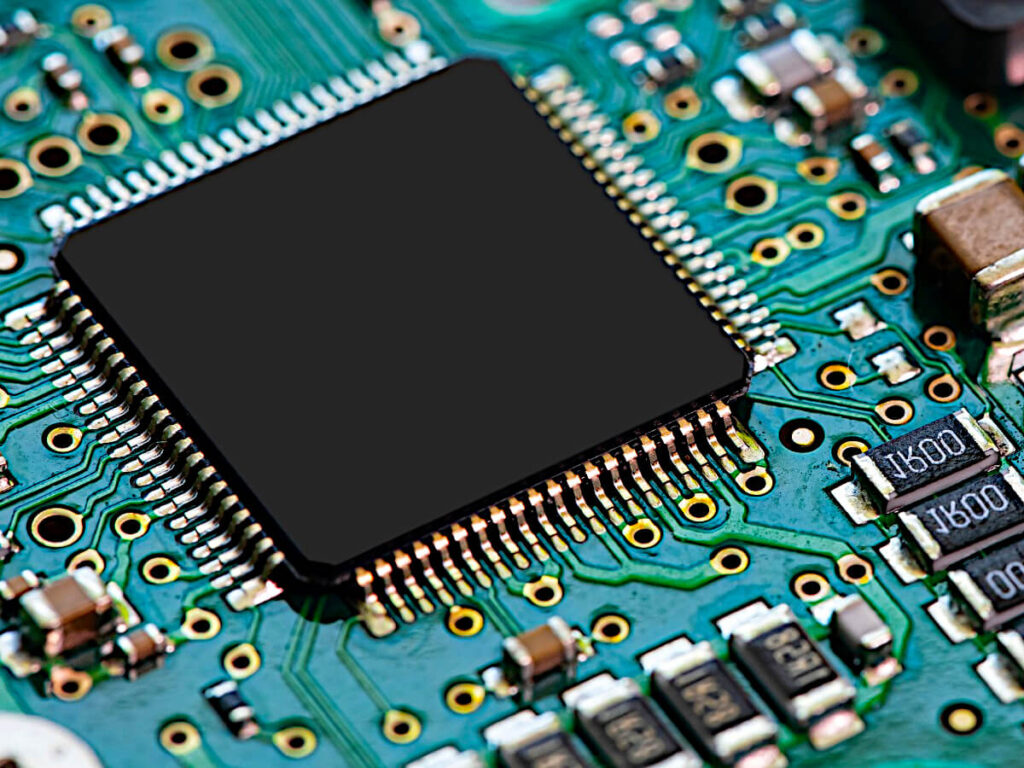
Microelectronics
Microelectronics are essential to modern society – from personal technology devices to transportation, security, alternative energy systems, and industrial manufacturing. With most microelectronic manufacturers located overseas and worsening global supply chain disruptions, US microelectronics fabrication has become more critical than ever.
The Need for Air Pollution Control (APC) in Microelectronic Manufacturing
As society transitions from fossil fuels to renewable energy alternatives, the need for microelectronics will continue to increase. Semiconductors and microelectronics play critical roles in transitioning to a zero-carbon energy infrastructure. Despite the importance of these materials, the production processes required are resource intensive and often require air pollution control equipment. For example, wafer etching and chamber cleaning use gases and can emit perfluorochemicals, persistent organic pollutants, ammonia, and fine particulate.
What APC Technologies Treat Microelectronics Emissions?
The most suitable system for your application will be dependent on many factors. Some technologies that may be applied to microelectronics production are:
- Catalytic Oxidizers – compact, energy-efficient systems that can treat low-volume air streams that are absent of particulate.
- Chemical Scrubbers – can treat large air volumes that need treatment of gas contaminants
- Particulate Scrubbers – to treat particulate-laden process streams
APC Designed to your Microelectronics Manufacturing Needs
Each application has its own distinct challenges, so air pollution control technology is not a one-size-fits-all solution. Our engineering design team holistically examines your process to determine the most appropriate solutions for your specific exhaust stream while balancing your overall cost of ownership.