Catalytic Oxidizer (RCO) vs Regenerative Thermal Oxidizer (RTO)
Catalytic Oxidizers and Regenerative Thermal Oxidizers are efficient systems for controlling air pollution. Both hold many benefits, but the right solution for your facility will be determined by its unique business and operational needs. While RTOs have historically been a popular choice, they are often misapplied or utilized in situations where a catalytic oxidizer may be the better (and more sustainable) option.
Below, we compare the unique aspects of each technology to help you understand the smarter choice for your facility.
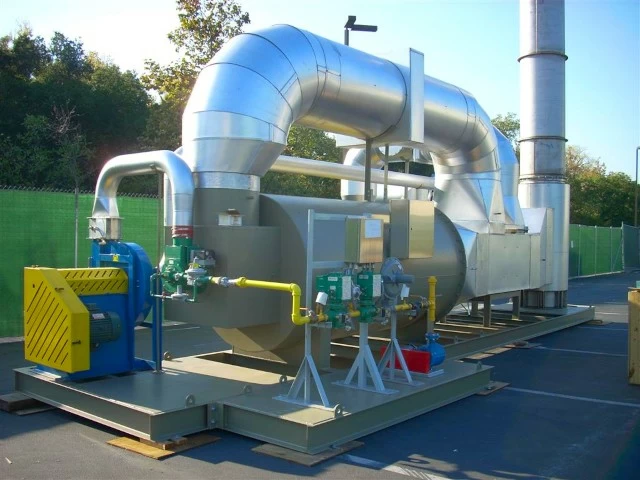
Catalytic Oxidizers (RCO)
Catalytic Oxidizers are best suited for applications containing low concentrations of Volatile Organic Compounds (VOCs). They maintain continuous steady-state operating conditions for nearly indefinite periods with minimal effect on the overall process.
RCOs are excellent choices for many industrial processes, including Ethylene Oxide Sterilization, Odor Control, Semiconductors, Medical & Life Sciences, Chemicals, Building Materials, Engine Testing, Bakeries, and Coating Processes.
Regenerative Thermal Oxidizers (RTOs)
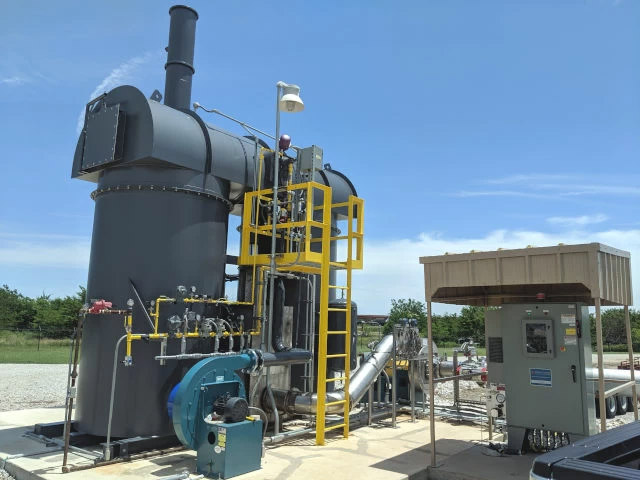
Regenerative Thermal Oxidizers are effective for applications with high waste streams accompanied by low VOC concentrations and virtually no particulates or condensables. Its design allows for air volumes of over 5,000 SCFM, with the potential to handle more than 50,000 SCFM.
RTOs are well-suited for Paint booths, Large Coating Processes, Automotive Applications, Ethanol Production, and Municipal Processes.
Ownership Costs
| Pros | Cons | |
|---|---|---|
| Recuperative Catalytic Oxidizer |
Pros
:
Quick start-up
Due to the lower operating temperatures, RCOs require less energy since oxidation occurs at much lower temperatures than other thermal oxidizers
Less metal fatigue because of lower operating temperatures
Electric options available can avoid gas and propane infrastructure requirements
RCOs have lower thermal efficiency for very low VOCs, meaning more energy is needed to sustain temperatures |
Cons: RCOs have lower thermal efficiency for very low VOCs, meaning more energy is needed to sustain temperatures |
| Regenerative Thermal Oxidizer | Pros : When treating low VOC concentrations, RTOs allow for high thermal efficiencies (95 %+), meaning lower fuel costs In some situations, RTOs can sustain acceptable combustion temperatures without supplemental fuel |
Cons:
RTOs have high maintenance costs due to many continuously moving parts, requiring regular inspections and servicing
Less than ideal for batch / intermittent processes due to the cooling of the system |
Maintenance & Reliability
| Pros | Cons | |
|---|---|---|
| Recuperative Catalytic Oxidizer |
Pros
:
Automated controls limit the operator interface The only major moving part is the system fan, so less maintenance is necessary Catalyst modules are easy to replace and potentially be reactivated for reuse |
Cons: Condensables or particulate poisons can deactivate or foul the catalyst |
| Regenerative Thermal Oxidizer | Pros : Automated controls limit the operator interface | Cons: Higher maintenance requirements and greater reliability issues due to continuously moving hardware (valves/dampers, seals, etc.) wearing out from high-impact operations Worn seals and media hotspots often lead to fugitive emissions (valves, seals, plugs) High-temperature metal fatigue Condensables or particulates can plug media and quickly hinder system performance Potential extended downtime is necessary for media or chamber repairs |
Destruction & Energy Efficiency
| Pros | Cons | |
|---|---|---|
| Recuperative Catalytic Oxidizer |
Pros
:
For moderate/low VOCs, minimal supplemental gas is needed (may be auto-thermal) Can use electric vs gas due to lower chamber temperatures |
Cons: N/A |
| Regenerative Thermal Oxidizer |
Pros
:
RTOs can often achieve thermal efficiencies of 95% or higher Can provide consistent destruction removal efficiencies (DRE) of <=98% RTOs provide much lower energy costs than other oxidizers for high air flows and low VOC concentrations |
Cons: DREs at or above 99% are difficult to achieve consistently over time due to cycling and valve leakage (difficult to maintain over time) |
Operating & Process Conditions
| Pros | Cons | |
|---|---|---|
| Recuperative Catalytic Oxidizer |
Pros
:
Steady state with minimum effect on the process
Better turn down and handling of variable VOC loads |
Cons: Catalyst systems are not suitable with select poisons and particulates |
| Regenerative Thermal Oxidizer | Pros : Effective for large flows of 5,000 to greater than 50,000 SCFM |
Cons:
Difficulty handling higher VOCs than design due to high thermal efficiency, over-temping the system’s chamber Constant valve cycling can affect upstream process with back pressure Condensable materials can foul the cold face or media of the RTO |
Frequently Asked Questions
As you can see, both catalytic and regenerative thermal oxidizers have pros and cons associated with cost, maintenance & reliability, DRE & energy efficiency, and operating/process conditions. The right solution for your process depends on many business and technical factors… one system does not fit all applications!
Catalytic oxidizers are lighter than RTOs due to the significant mass of media RTOs require. They provide the option to install on roofs or mezzanines without the structure and footings that an RTO would require.
Factors to be considered in assessing overall lifetime cost include initial installed capital cost, ongoing operating cost, maintenance, and reliability.
The initial capital cost for the equipment is generally similar and is dependent on the flow of the exhaust to be treated. Installation cost for electric catalytic oxidizers is typically lower than RTOs as RTOs tend to be much larger and heavier than similarly sized catalytic oxidizers. This potentially limits where the RTO may be placed and require additional foundation support. However, very large electric catalytic oxidizers require access to high electric loads at the site.
Ongoing operating cost depends on several factors including the pollutant to be treated, the required destruction efficiency, the amount of potential energy in the stream, and the cost of electricity compared to gas at the site. Each application should be evaluated to understand the estimated operating cost.
Maintenance and reliability are difficult to predict but very important considerations. When properly designed for industrial use, both types of oxidizers have good on-stream time and are capable of operating 24/7 for long periods of time. Electric catalytic oxidizers have much fewer moving parts compared to an RTO. Both systems have fans that operate continuously. However, an RTO has diverter valves, which shift frequently to alter the direction of flow through the system. These valves and drives create continuous pressure and temperature fluctuation and are subject to significant wear and tear. Additionally, RTOs operate at much higher temperatures which stresses the materials of construction and may lead to hot spots. Both systems are subject to fouling or plugging if placed in the wrong application.
One main difference between electric catalytic oxidizers and RTOs is the source used to heat the incoming air. RTOs mainly use natural gas for heating, due to the higher temperatures required, while electric heating elements are used for the Electric CatOx. Depending on the resources used to generate electricity, electrification can potentially reduce carbon dioxide (CO2) emissions. In the United States, over 40 percent of electricity is currently generated using zero-carbon fuels such as nuclear energy and renewables.¹⋅²
¹Cleary, K. (2022). Electrification 101. Resources for the Future. Retrieved September 27 2022 from https://www.rff.org/publications/explainers/electrification-101/
²U.S. Energy Information Administration. (2024). Electricity explained: Electricity in the United States. Retrieved March 10, 2026 from https://www.eia.gov/energyexplained/electricity/electricity-in-the-us.php
Related Downloads
Looking for a catalytic oxidizer or thermal oxidizer? Reach out to our experienced sales representatives to get guidance on the smarter choice for your application!